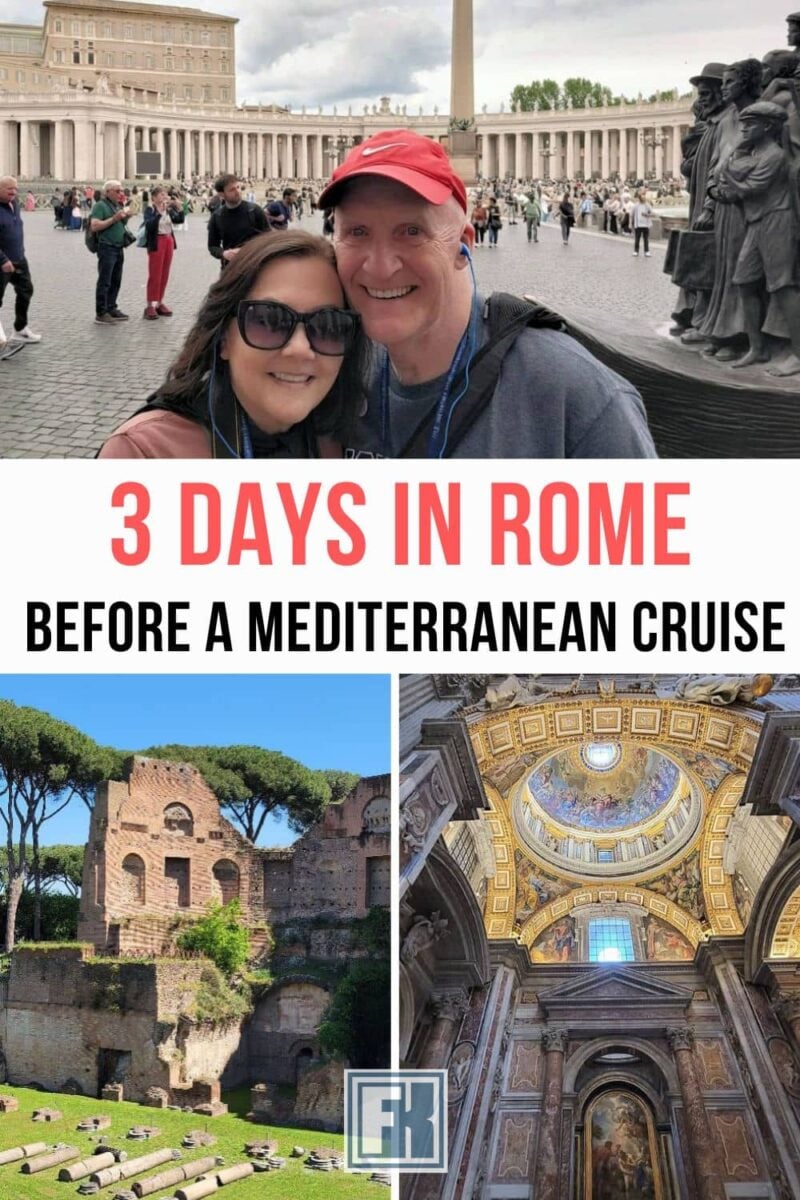
3 Days In Rome Before Your Mediterranean Cruise
Rome doesn’t do subtle. It hits you all at once. The second you arrive, it’s pulling at your senses: the golden light, the hum of traffic, the unmistakable scent of espresso before spotting the café. It’s a lot. And that’s precisely why getting there early makes all the difference.
A Mediterranean cruise may be the main event, but Rome before your ship departs? That’s the prologue that makes everything else richer.
Three days in Rome is the sweet spot. It was enough time to see the icons, eat well, wander without a schedule, and recover from our transatlantic flight before embarkation. We also cover how to get from Rome to the Civitavecchia port in another article.
This itinerary is designed for travelers who want to make the most of Rome without running themselves ragged before a one or two-week cruise. Pace matters here.
Why Arriving Early In Rome Is Non-Negotiable
Let’s start with the honest truth: flying from North America to Italy is exhausting. Most East Coast flights take 8 to 10 hours. West Coast travelers face 12 or more with layovers. You will land tired, possibly disoriented, and not ready to sprint through the Vatican.
Arriving 2 to 3 days before your cruise gives your body time to adjust to the time difference, protects you from travel disasters, and most importantly, gives you Rome. Not a bleary-eyed dash between landmarks but a real taste of one of the world’s greatest cities.
Read this 3-day itinerary before landing in Rome and plan your excursions in advance. Many places, like the Colosseum and Vatican, release tickets only so far ahead.
Where To Stay: Best Neighborhoods For Pre-Cruise Visitors
Rome’s neighborhoods each have a distinct personality. For pre-cruise travelers, the priorities are walkability, proximity to major sights, and a manageable transfer to Civitavecchia port on embarkation morning. What you plan to see, may factor into your choice of where to stay in Rome.
|
Neighborhood |
Best for |
Transfer to Civitavecchia |
|---|---|---|
|
Trastevere |
Charm, restaurants, walkability |
Taxi or shuttle ~1 hr 15 min |
|
Campo de’ Fiori |
Central location, lively piazzas |
Taxi or shuttle ~1 hr 15 min |
|
Prati (near Vatican) |
Vatican access, quieter streets |
Taxi or shuttle ~1 hr |
|
Termini area |
Budget-friendly, metro access |
Train to Civitavecchia ~1 hr |
A note on hotels: accommodation in Rome’s historic center can be pricey. We chose not to stay there because of the price.
If budget is a concern, the Prati neighborhood near the Vatican offers excellent value and a quieter atmosphere. We stayed in at Hotel Pacific Roma with buffet breakfast included, a bonus for saving money. Plus, we were 5 minutes from the subway.
Avoid staying too far east toward Termini unless on a strict budget. The area, while convenient for trains, lacks the charm that makes Rome memorable.
Some cruise guests stayed in Rome before and after their cruise. They split time in Prati to be close to the Vatican. Then stayed near the Colosseum after disembarking to experience two neighborhoods.
Day 1: Arrival, Vatican, And Trastevere
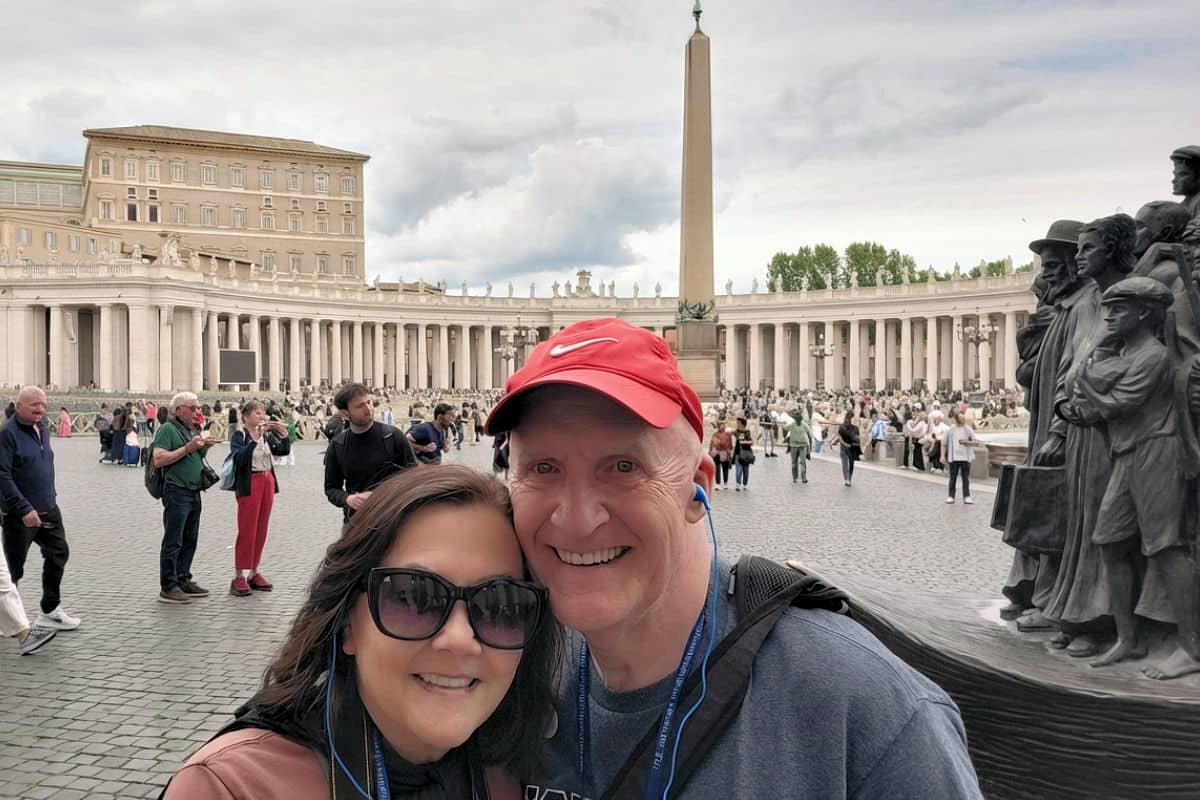
We arrived late morning, eager to hit the streets and see the sights. Since we stayed near the Vatican, it made sense to start there. Adjust the itinerary to suit your home base.
Morning — Vatican Museums And The Sistine Chapel
The single most important logistical tip for this itinerary is to book your Vatican tickets in advance. Without a reservation, the line can stretch for hours. Book directly through the Vatican website (museivaticani.va) or a guided tour operator.
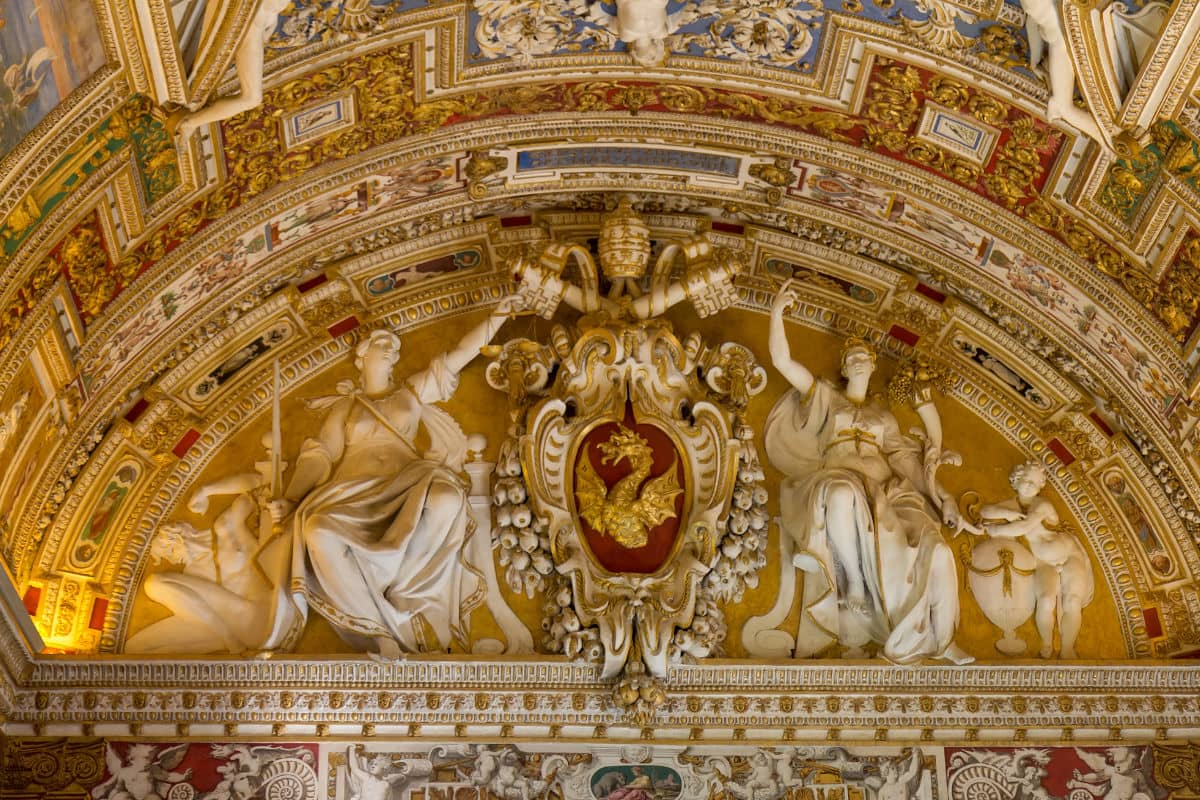
The Vatican Museums are vast—over 7 miles of galleries if you walk every room. Comfy shoes are essential. Follow the main route toward the Sistine Chapel, pausing at the Gallery of Maps (spectacular 16th-century frescoed maps of Italy) and the Raphael Rooms along the way.
We were allowed to take photos in the Vatican Museums and nearly ran out of battery. However, photography is prohibited in the Sistine Chapel.
The Sistine Chapel needs no introduction. What people often don’t expect is its size; it is smaller and more intimate than imagined, with a lower ceiling. Michelangelo painted it over four years while lying on scaffolding. Stand long enough to really look.
The Creation of Adam is on the ceiling above the altar end. The Last Judgment covers the entire altar wall. It is, by any measure, one of the most extraordinary rooms in the world.
Afternoon — St. Peter’s Basilica
From the Sistine Chapel, follow the path through to St. Peter’s Basilica. Entry is free. The interior is breathtaking in scale, the largest church in the world by interior area. Depending on the number of visitors, the line to get through security may be long. We waited almost an hour.
Michelangelo’s Pieta, a marble sculpture of Mary holding the body of Christ, is to the right of the entrance and is a creation of quiet grief. But honestly, all the statues and ceilings are masterpieces that compete for your attention.
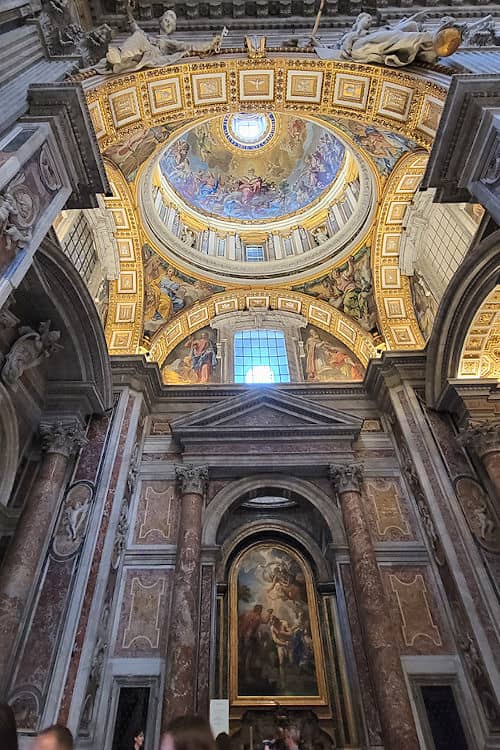
We took a tour of the Basilica, which was very insightful. It included the Vatican grottoes where the former popes are buried.
If your knees allow, climbing the dome offers stunning, unforgettable views of Rome. There’s an elevator partway up, with stairs for the rest. The full climb involves a slightly disorienting, curving staircase built into the dome but is worth the effort.
Evening — Trastevere
Head to Trastevere to eat. Dinner should be lingering and unhurried. To dine the Italian way, enjoy Aperitivo hour first, usually between 6 and 8 pm. Find a bar and order an Aperol Spritz or a Negroni. It’s a Roman ritual.
After dinner, Trastevere’s bohemian neighborhood comes alive. Join the action or wander the labyrinth of cobblestone streets.
Day 2: Ancient Rome — Colosseum, Roman Forum, And Palatine Hill
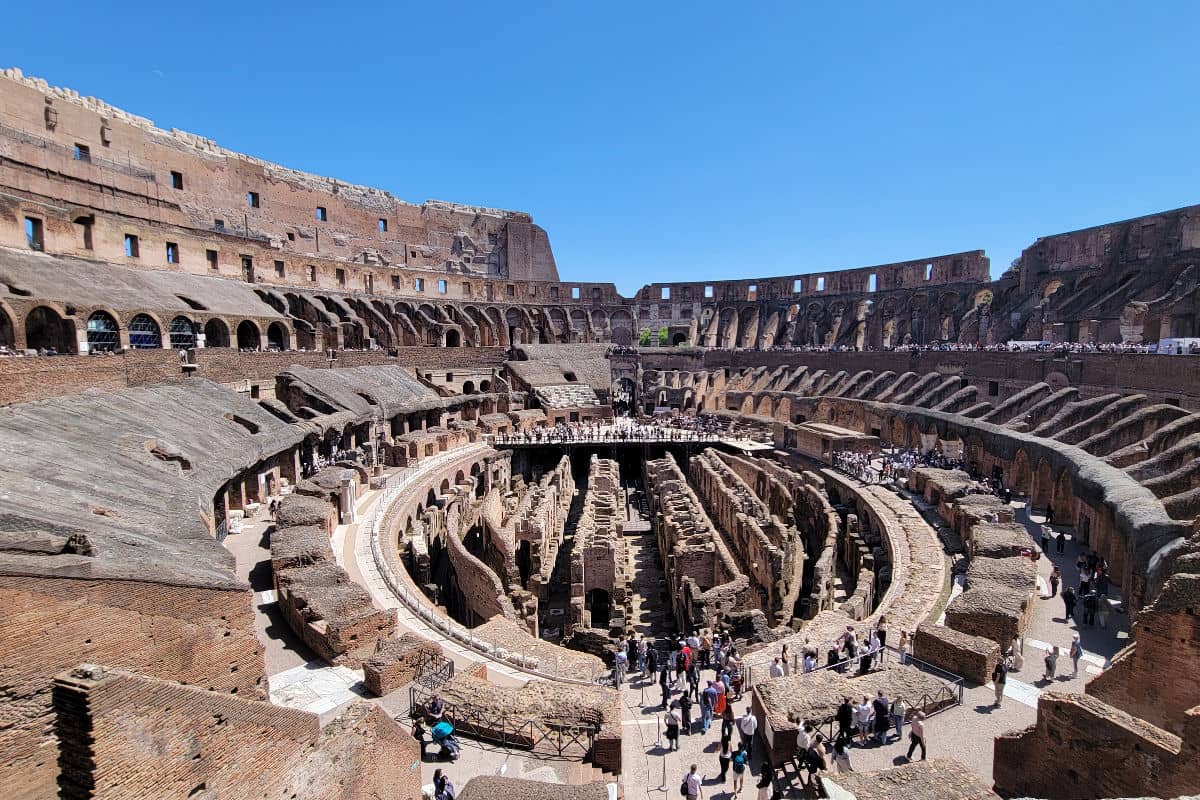
Rise early to make the most of a busy day. The single most important logistical tip is to book your Colosseum tickets weeks in advance, not just a few days.
During peak season, spring through fall, walk-up tickets can mean a 2-3-hour wait, and the timed-entry system fills quickly. The official website releases some tickets 30 and 7 days before your date. Timed entry is strictly enforced; we could only join the line 15 minutes early.
Your best options are to book directly on the official Colosseum website or purchase a combo ticket through a reputable third-party tour operator. Tickets vary: some include only the Colosseum, others only the arena floor, and others only the basement.
We purchased a “full experience” including the Colosseum (and arena floor), the Roman Forum, and Palatine Hill. You’ll want all three. Carry picture ID with your tickets.
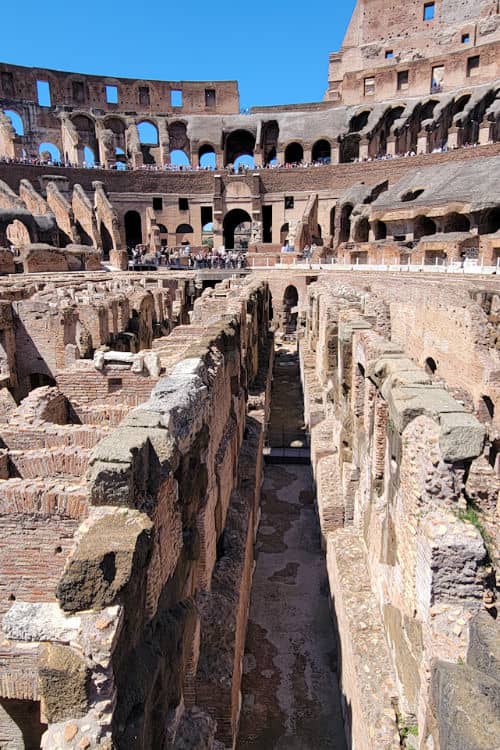
On the day we visited, there was a huge queue for the Forum, so we did it last. There was almost no line for Palatine Hill, which flows into the Forum area.
Morning — The Colosseum
Meet your guide or arrive at your timed entry slot and allow 45 minutes to an hour inside. Arrive on time; latecomers may be denied entry.
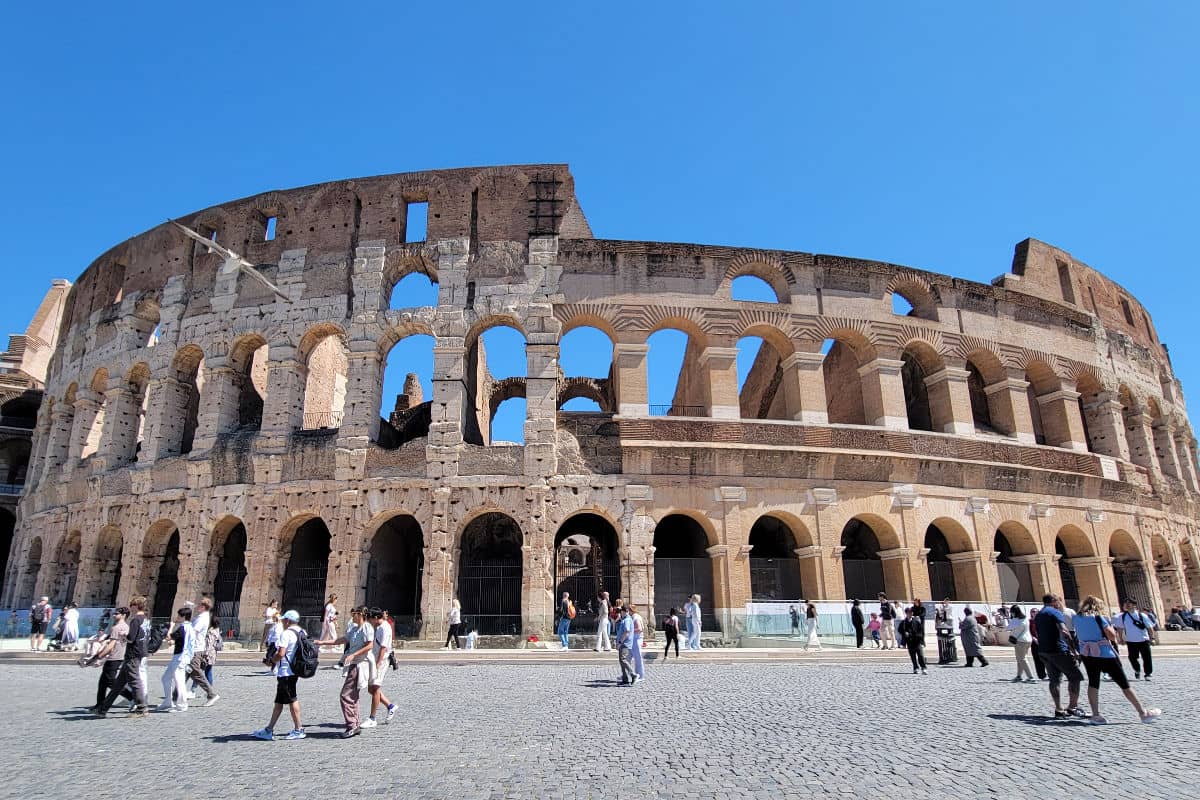
The Colosseum is more awe-inspiring in person than any photograph suggests. We were genuinely moved standing on the arena floor where gladiators once stood. Don’t rush it. For a richer experience, consider a small-group guided tour.
Late Morning To Early Afternoon — Roman Forum And Palatine Hill
Our Colosseum tickets included direct access to the Roman Forum and Palatine Hill, which sit adjacent. The Forum is the heart of ancient Rome, the political and social center of an empire that once stretched across three continents.
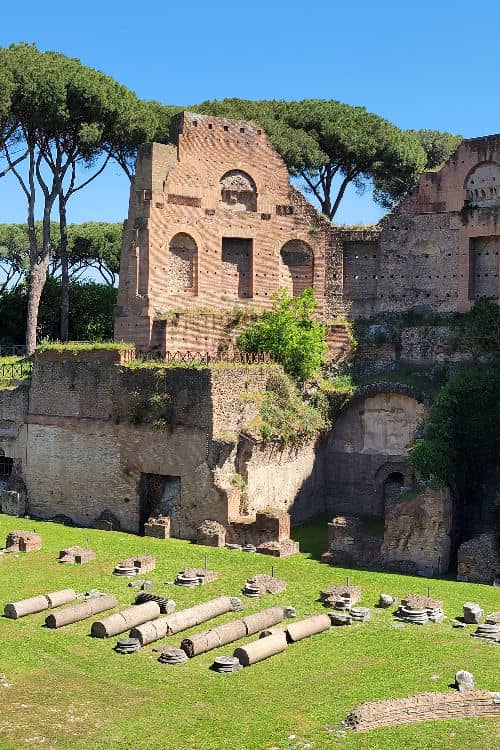
Walk the Via Sacra, the main road of ancient Rome. Stand where Julius Caesar’s body was cremated. Absorb it.
Palatine Hill, rising above the Forum, offers the best views of the ancient city and requires less walking than it looks on the map. It’s a beautiful spot to rest. Bring water. Rome is hot in summer. Of the three areas, Palatine Hill was the least congested.
A word of warning: the Colosseum, Palatine Hill, and the forum are not stroller-friendly.
Afternoon — Colosseum Area
The area surrounding Rome’s iconic Colosseum is a treasure trove of historical importance and lively culture. Between the Colosseum and Palatine Hill is the Arch of Constantine, a triumphal arch celebrating Emperor Constantine’s victory.
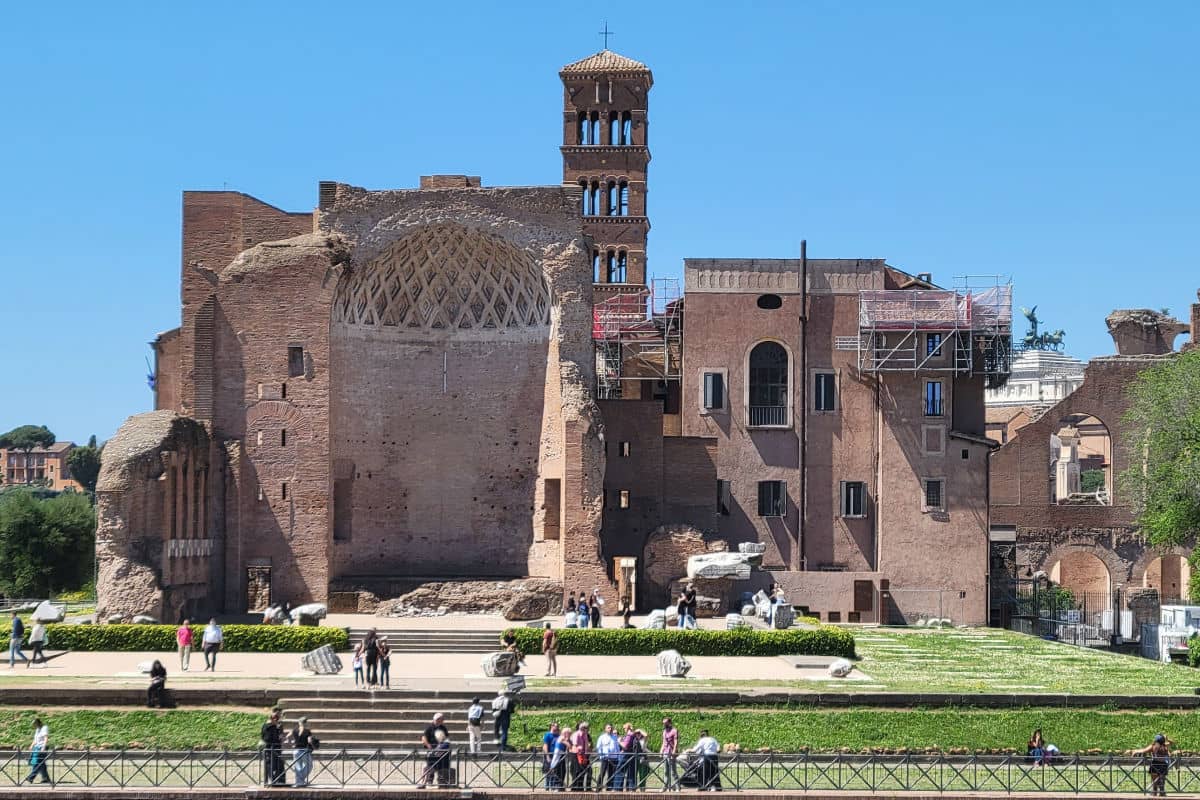
Wander the Domus Aurea, Nero’s opulent palace, often referred to as the “Golden House.” This vast complex features lavish gardens, a man-made lake, and detailed frescoes that adorn its walls.
The stone-paved streets feature picturesque cafes and shops, blending modern life with traces of the past. This area is an essential stop for visitors wanting to immerse themselves in Roman history’s grandeur.
Get Your Skip The Line Tickets Here
Colosseum, Roman Forum and Palatine Hill
A 3-hour guides tour (does not include the arena.
The Colosseum arena floor
A guided tour with Palatine Hill and the Roman Forum included.
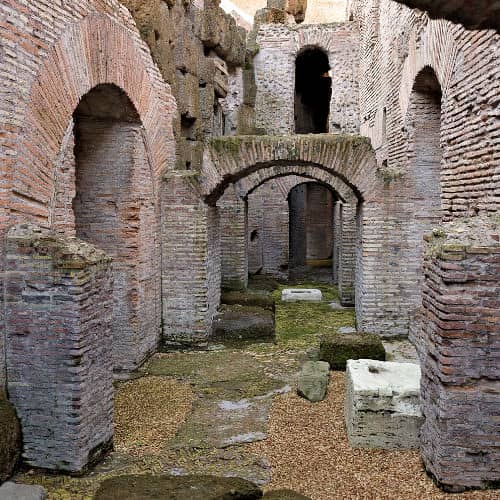
Colosseum underground tour
A guided tour of the underground passageways of the Rome Colosseum.
Evening — A Quieter Dinner
After a big history day, keep dinner simple. Find a neighborhood trattoria, order cacio e pepe or amatriciana, and call it an early night. Tomorrow is your last day in Rome. You’ll want your energy.
Day 3: Campo de’ Fiori And Pantheon
Rome has many piazzas, but you’ll enjoy a special one this morning.
Morning — Campo de’ Fiori
Campo de’ Fiori is one of Rome’s most beloved piazzas and perfect for a wander. In the morning, it hosts a colorful outdoor market; by early afternoon, it shifts into a lively gathering place. Browse and buy some beloved Italian souvenirs.
The surrounding streets are packed with small shops, bakeries, and gelato spots. Buy something and eat it while walking. This is the correct approach.
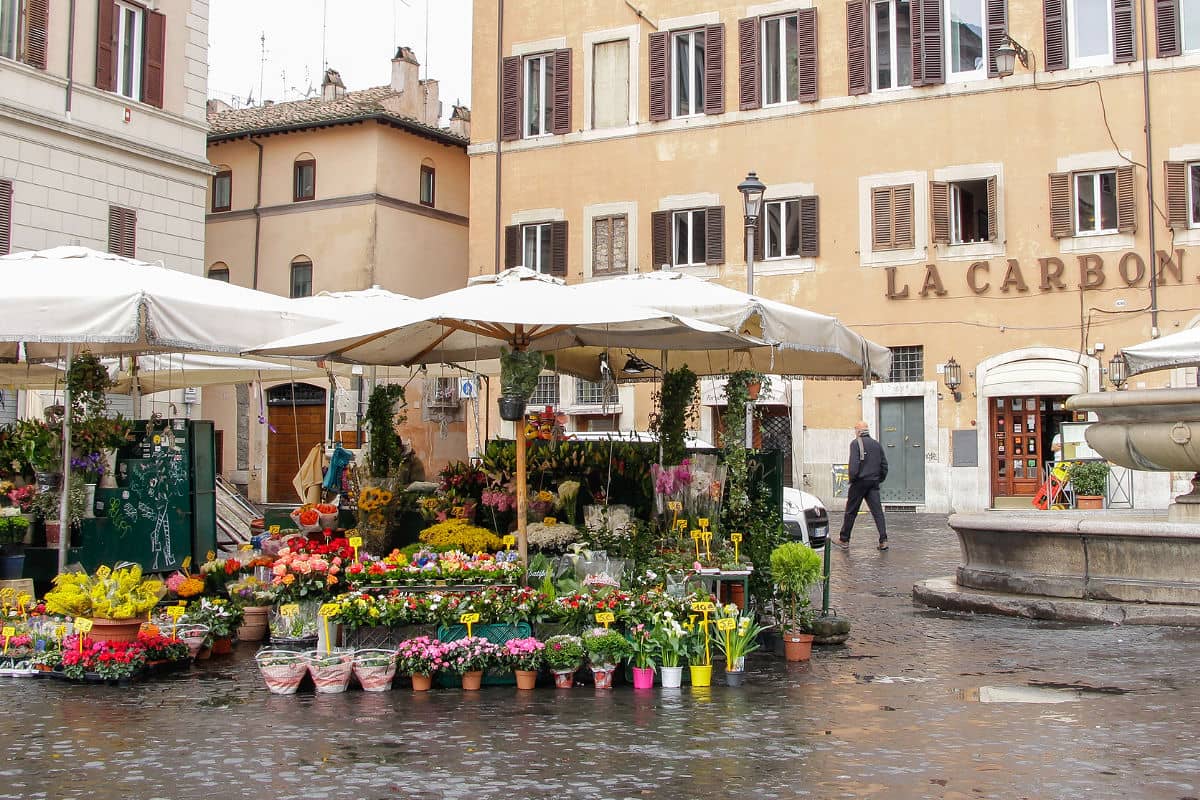
From Campo de’ Fiori, it’s a 10-minute walk to Piazza Navona, one of Rome’s great baroque showpieces. You don’t need a guided tour. Just sit, watch street artists, and let the city envelop you.
Afternoon — Pantheon
The Pantheon was constructed as a temple to the gods in 126 AD. It features a stunning coffered concrete dome, which remains the largest unreinforced concrete dome in the world to this day. The oculus at its center measures 27 feet in diameter and allows natural light to fill its interior.
Don’t miss the opportunity to admire the tombs of notable figures, including the painter Raphael.
Late Afternoon — Trevi Fountain
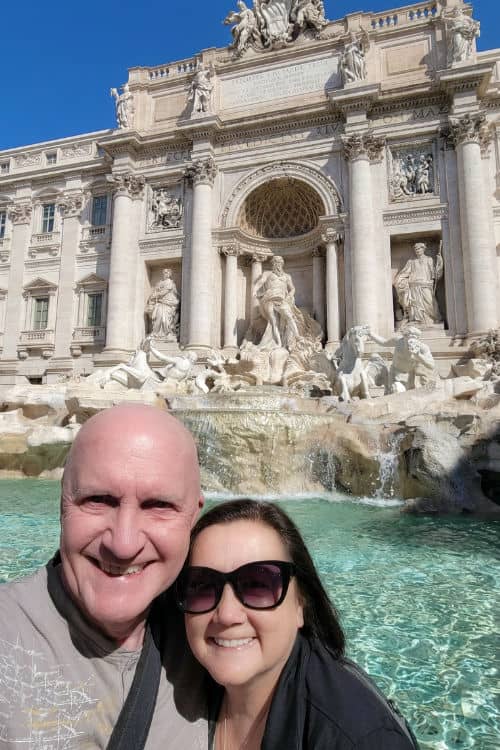
From the Pantheon, make your way to the Trevi Fountain. In late afternoon, the glowing light hits the travertine stone and the crowds begin to thin. It’s enormous, baroque, and completely over the top. In other words, it’s perfect!
Toss your coin over your left shoulder with your right hand; the tradition guarantees a return to Rome. To get a closer shot of the fountain, pay €2 to enter the inner circle. It’s the only way to get photos next to the water.
Head back to your hotel and find a patio restaurant on the way to enjoy the ambiance of Romantic Rome one last time.
Practical Tips For Travelers In Rome
Currency And Tipping
Italy uses the euro. While credit cards are widely accepted, we carried cash for small purchases, market stalls, and occasional old-school trattorias with handwritten signs saying Contanti only (cash only).
Tipping in Italy is optional and far more modest than in the U.S. When eating in Rome, rounding up the bill, leaving a euro or two, or adding 5 to 10 percent for excellent service is generous by Italian standards. No one expects 20 percent. How refreshing!
Metro vs. Taxis
Rome’s metro is limited: only two useful lines (A and B), and it misses many major sights in the historic center. We used it a few times and found it easy to navigate. For getting around main tourist areas, walking is usually best.
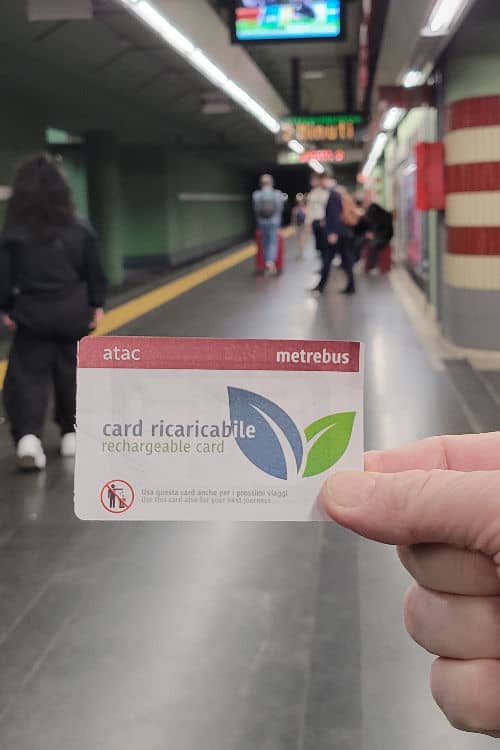
Taxis are metered, affordable, and available at designated stands or via the ItTaxi app. Ride-share apps like Uber operate in Rome, though taxis are typically more reliable. When we used the Uber app, it showed prices for Uber and taxis, letting us choose either.
Avoid unlicensed drivers who approach you at the airport or train station. Use only official white taxis with a meter or a pre-arranged private transfer.
What To Wear
Comfortable walking shoes are non-negotiable. Rome’s cobblestone streets are beautiful but brutal on the feet. Leave flip-flops at the hotel. The cobblestone areas of the Roman Forum, Palatine Hill, and Colosseum are especially hazardous, with many tripping hazards.
Both St. Peter’s Basilica and the Vatican Museums enforce a dress code: shoulders and knees must be covered for men and women. Don’t make a common Vatican City mistake by wearing the wrong clothing.
Is 3 Days In Rome Enough?
Three days in Rome before a Mediterranean cruise is not an indulgence. It’s a strategy. It means you board the ship rested, with full memories already in your pocket, the Colosseum at golden hour, the chaos of Campo de’ Fiori, the silence of the Sistine Chapel.
You’ve already had gelato at 10 a.m. and wine at noon with zero apologies. Rome has recalibrated your sense of time, and now you’re ready for the sea.
A 3-day Rome itinerary was enough to see it, feel it, and absorb it. The Mediterranean is vast and beautiful. But it starts here, in the eternal city, one perfect espresso at a time.