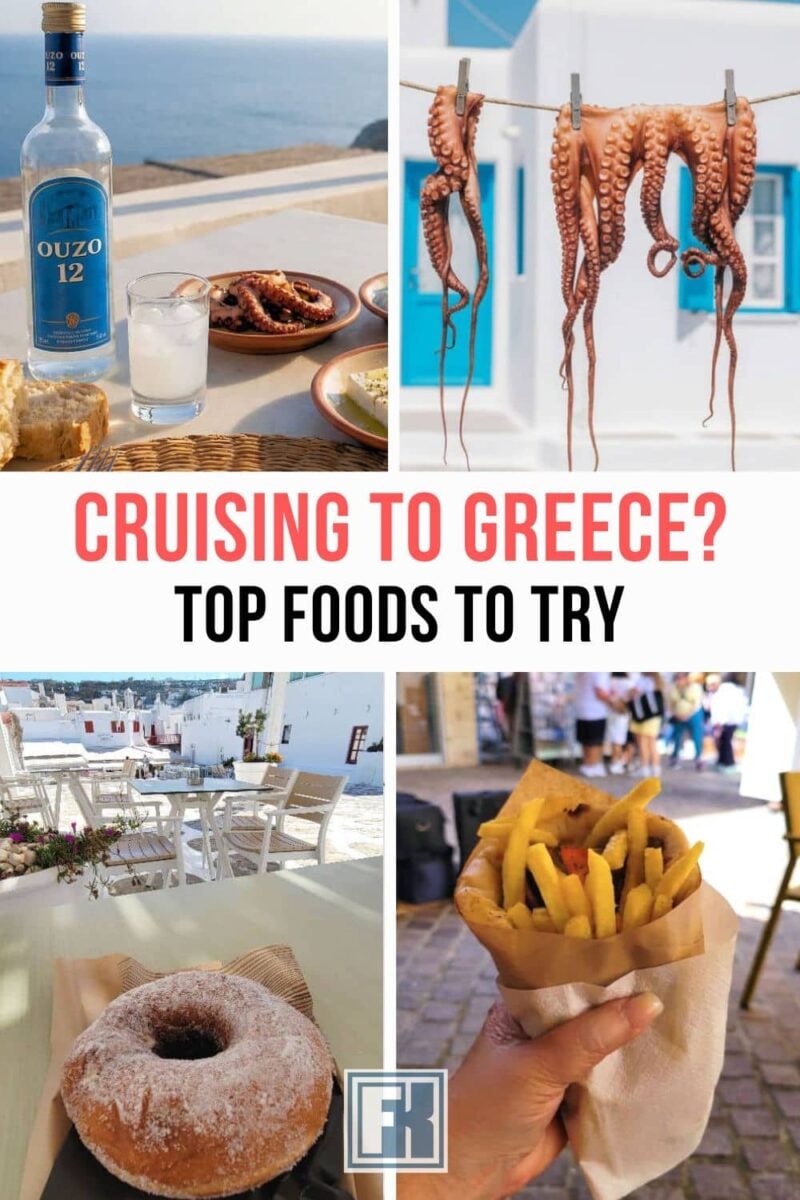
Greek Island Food: The Best Dishes To Try At Every Cruise Port
My first real taste of Greece didn’t happen in a restaurant. I was at a small bakery counter in Chania’s old town, with warm spanakopita juice running down my wrist, trying not to swoon in front of strangers.
That messy, unplanned, and perfect moment is what Greek island food offers when you stop searching for the familiar and just follow your nose.
If you’re cruising the Greek islands and wondering what to eat at each stop, this food guide is for you. We’ve done the research, made the rookie mistakes, and eaten our way from Athens to Santorini, Mykonos, and back. Here’s how to do it right.
How To Spot A Real Taverna (And Avoid The Tourist Traps)
Rule number one: Skip any restaurant where staff are outside trying to get your attention. Real Greek tavernas don’t need to hustle. Look for places where locals eat, especially in the mid-afternoon, since Greeks eat lunch late.
Handwritten daily specials on a chalkboard, menus in both Greek and English (not just English), and mismatched furniture are all good signs. If you see photos of every dish on the menu, you’re probably in a tourist spot.
Avoid the waterfront in Santorini’s Oia. While stunning, you’ll pay triple for half the quality. We know; we paid €20 for two lemonades. In Mykonos town, step even one or two streets back from the main drag, and the food gets dramatically better and cheaper.
Must-Try Dishes: A Port-by-Port Greek Island Food Guide
Chania, Crete: Where Greek Food Gets Serious
We spent our first port day in Chania, Crete. Crete has its own distinct food culture and, honestly, some of the best eating in all of Greece. This is where we prioritized lunch over almost anything else on the itinerary.
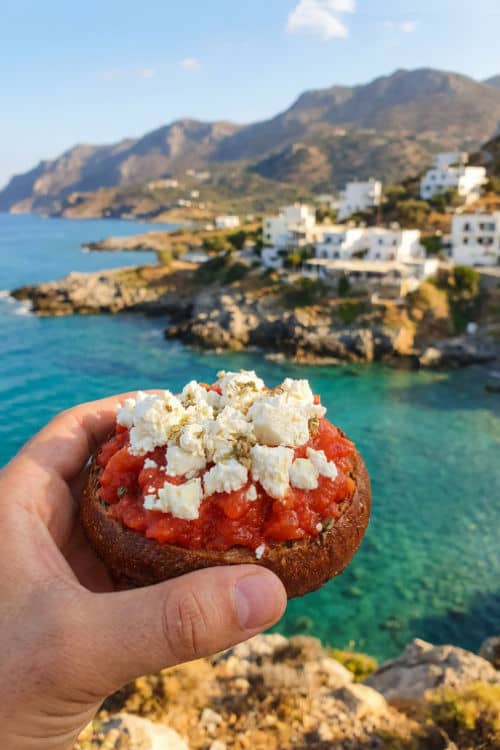
Dakos should be your first order. It’s a kind of Cretan bruschetta: twice-baked barley rusk soaked in olive oil, topped with grated tomato, crumbled mizithra cheese, olives, and dried oregano. Simple and amazing.
The olive oil here is truly special. Crete makes some of the world’s best, and you can taste it in every dish. We even bought some to take home as gifts.
Moussaka is Greece’s most famous dish for a reason but avoid the tourist versions that are too greasy. A good moussaka, with layers of eggplant, spiced ground lamb, and béchamel, should be firm, fragrant, and served warm, not piping hot. Try it at a family taverna for lunch.
Crete is also great for fresh fish. The harbor area has several good options. Look for the day’s catch displayed on ice at the door. Whole grilled fish, dressed only with lemon and olive oil, is Mediterranean perfection on a plate.
Santorini: Unique Flavors From A Volcanic Island
Our port day in Santorini wasn’t as serene as the one in Crete. Santorini suffers from over-tourism, and it shows. Still, what the island lacked in tranquility, it made up for in food. With 15 hours in port, we had plenty of time to enjoy Greek Island cuisine, more than once.
Santorini’s volcanic soil produces ingredients unlike anywhere else in Greece. The island has a genuine food identity worth exploring.
Tomatokeftedes. Santorini cherry tomatoes are small, very sweet, and full of flavor from the island’s dry, mineral-rich soil. You’ll see them in salads, sauces, and sun-dried at every market. Grab a bag for a snack, or better yet, try the tomatokeftedes (tomato fritters).
Santorini dishes
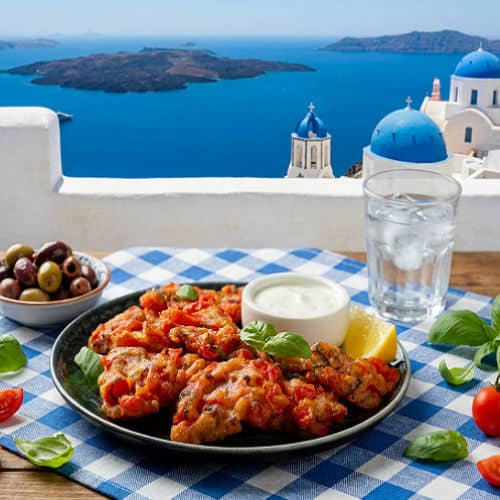
Tomatokeftedes
Fritters made from very sweet cherry tomatoes.
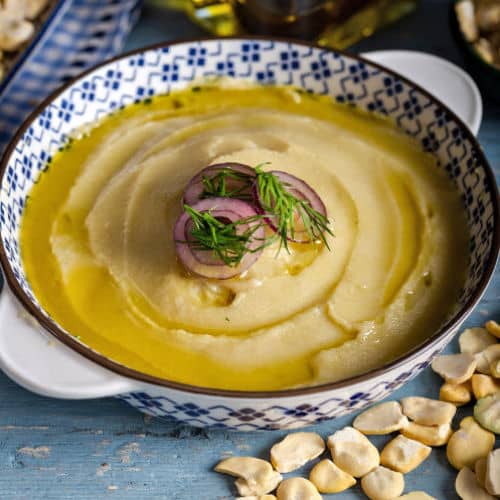
Fava
Split pea purée, perfect with sourdough bread.
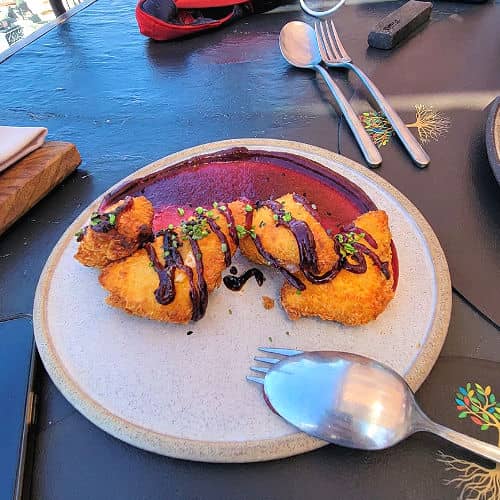
Saganaki
Delicious fried goat or sheep cheese.
Fava is another Santorini specialty. It’s a smooth, golden purée made from yellow split peas (not fava beans, confusingly), drizzled with olive oil and topped with capers and raw onion. It tastes earthy and different from hummus, which is made from chickpeas and tastes more nutty.
Loukoumades, or warm Greek honey donuts, are everywhere and hard to resist. The best ones are light, crispy, drizzled with thyme honey, and sprinkled with cinnamon. If they’re doughy and cold, skip them. Always ask for them fresh.
Saganaki, or fried cheese, is another classic. It’s often made from sheep and goat milk, but if you’re lactose-intolerant like me, ask if it has cow’s milk. Halloumi is abrined Cypriot cheese with a minty flavor. I lived in Cyprus for two years and loved fried Halloumi.
I ordered Saganaki at Rizes, a spot recommended by a local. The cheese melted in my mouth and tasted great with or without the Ouzo & Berries Marmalade. I honestly could have eaten two servings, by myself!
Mykonos: Seafood and Souvlaki Between Windmill Sightseeing
Our port day in Mykonos was pricey, especially for food. It’s easy to spend a lot on average meals. Still, there are real treats here if you know where to look.
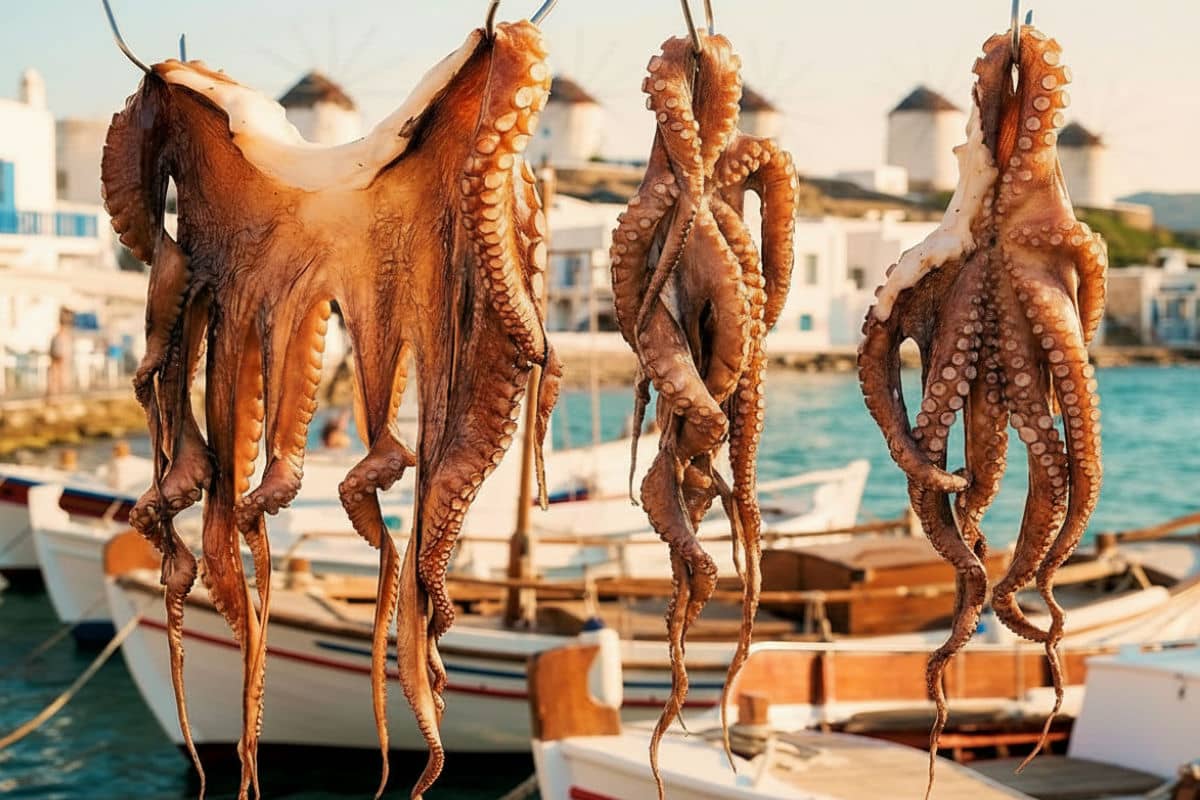
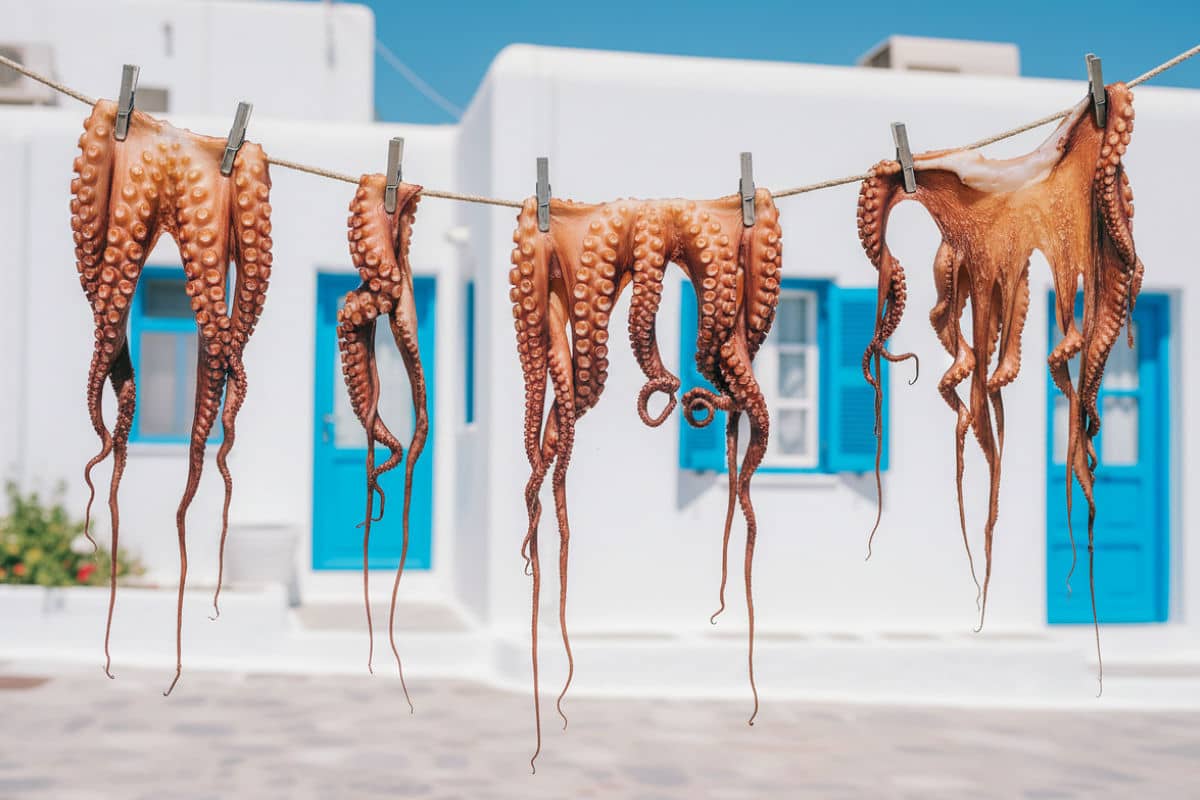
Grilled octopus is a Mykonos icon. The best ones are hung to dry in the sun—we saw them outside seafood places near the water. They’re grilled over charcoal and served with lemon and olive oil. Order it, take a photo, and enjoy it slowly.
You’ll see Mykonos sausage everywhere. It’s made with a bold mix of spices like oregano, pepper, and sea salt, then air-dried. Locals are proud of its unique Mykonian flavor.
Souvlaki is Greece’s street-food king: skewered, grilled pork or chicken wrapped in warm pita with tzatziki, tomato, and onion. Even in Mykonos, a good souvlaki wrap from a proper grill house is both affordable and deeply satisfying. It is the antidote to excessively priced restaurant meals.
Spanakopita is a flaky phyllo pastry filled with spinach and feta. I couldn’t eat it because I’m lactose-intolerant. A single slice from a bakery makes a perfect mid-morning snack between exploring the windmills and the narrow, whitewashed streets.
Athens: Street Food Done Right
If your cruise includes a day in Athens, even just a few hours, eat a gyro. Not a tourist-facing platter, but an actual gyros pita from a stand or fast-casual spot. We ate one in Crete, and it was delicious to the last bite.
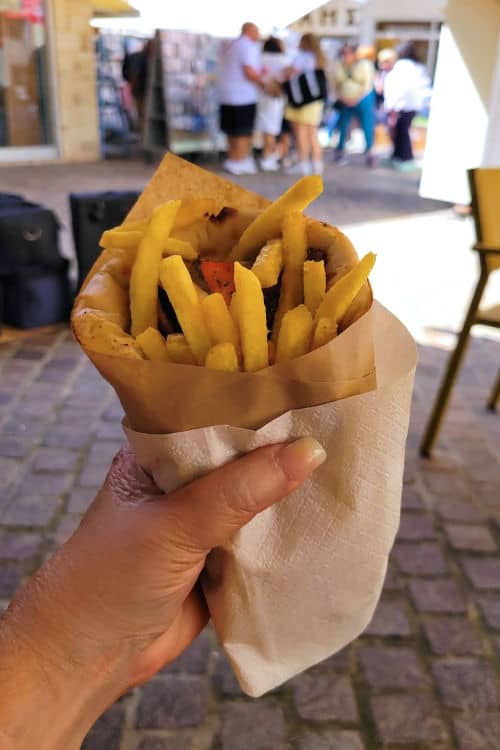
Gyros are made with shaved pork or chicken from a rotating spit, loaded into warm pita with garlicky tzatziki, tomatoes, onions, and fries. They’re cheap, filling, and taste amazing—a great alternative to pricey meals.
Athens is also the best place to find great baklava. It’s made of layers of phyllo, chopped walnuts or pistachios, and soaked in honey syrup. The best baklava is sweet but not too rich, with clear layers and a bit of crunch.
Try patisseries near Monastiraki or in the Plaka neighborhood.
Greek Wine And Beverages: What To Drink
Ouzo is the aperitif of Greece, an anise-flavored spirit that turns cloudy white when ice or water is added. Sip it slowly with a small plate of mezedes (appetizers), the way locals do, never as a shot. They also make a candy from Ouzo. It has the same aniseed flavor which I love.

Tsipouro is the stronger, grappier cousin, less sweet, more intense, and more commonly drunk on the mainland.
For wine, look beyond Santorini’s Assyrtiko (though it’s excellent with seafood). Crete produces bold, interesting reds from the Kotsifali grape. Local house wines poured by the carafe in tavernas are often the best value on the menu.
Don’t leave without trying Vinsanto, a dessert wine made from sun-dried grapes. It pairs well with cheese.
Ordering Tips: Navigating Greek Menus And Customs
Greeks eat late. Lunch is from 2 to 4 pm, and dinner starts at 9 pm or later. As a cruiser, you’ll probably eat outside these times, and that’s okay. Just don’t be surprised if a taverna is almost empty at 6:30 pm.
Mezedes (small, shared plates) are the natural way to eat in Greece. We ordered several and shared. It let us try more and tends to produce a better meal than ordering individual entrées. A word of warning; some of the small dishes are large portions. We couldn’t finish all of what we ordered.
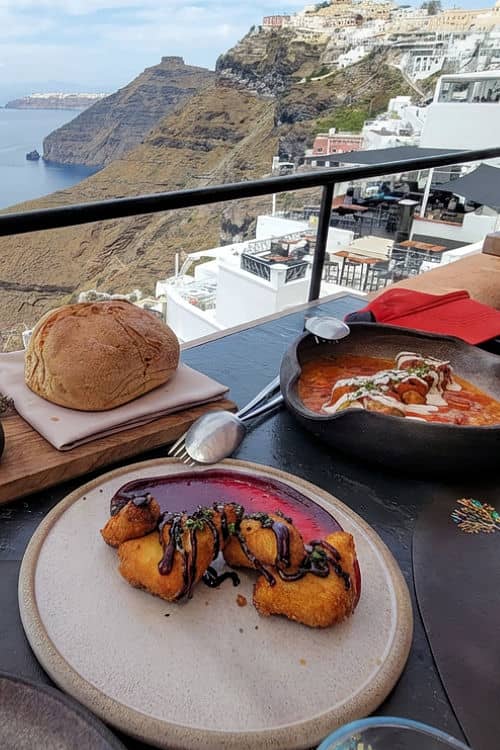
Cover charges for bread are common and legal. Check your bill, it’s usually just a euro or two per person and worth it for good bread. Refuse the bread if you don’t intend to eat it.
Tipping around 10% is appreciated and customary. Water will sometimes arrive fizzy unless you specify “still” or “nero horis gazi” (water without gas).
Foods To Bring Home: What Clears Customs
Traveling back to Canada or the US? Here’s what’s generally safe to pack:
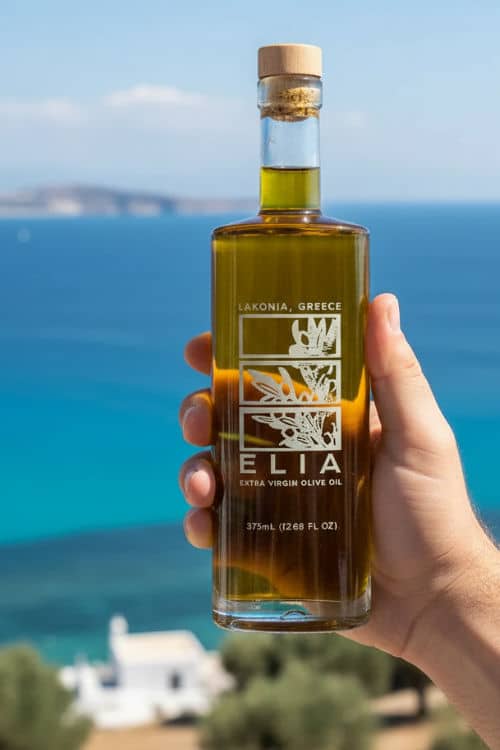
Olive oil is the obvious choice. Cretan extra-virgin olive oil is a genuine treasure. Pack it in your checked bag, well-wrapped if it’s under the airline’s liquid allowance.
Dried herbs (oregano, thyme) travel beautifully and are wildly aromatic here. Thyme honey is another excellent purchase. Darker and more complex than standard honey. Our itinerary included Turkey, where we purchased saffron. It’s far more affordable there.
Sealed, commercially packaged goods (vacuum-sealed olives, dried pasta, packaged cheese like graviera) typically clear customs without issue. Fresh fruits, vegetables, and unpackaged meats do not.
When in doubt, check the CBSA rules for Canada or the USDA guidelines for the US before you shop.
The Real Secret To Eating Well In Greece
Greece rewards curiosity and penalizes convenience. The best meals we’ve ever had here were in places we nearly walked past — a hand-lettered sign, a table with a plastic tablecloth, an elderly woman cooking in a visible kitchen.
Ask a local for restaurant recommendations and eat where they go. Order what you don’t recognize. Ask what’s fresh. Say “ti sistatate?” (What do you recommend?) and trust the answer.
With only a few hours in each port, you can’t do everything, but you can always eat well. In Greece, that might be the most important thing.